Quem namorou Robert Dudley, 1st Earl of Leicester?
Isabel I de Inglaterra namorou Robert Dudley, 1st Earl of Leicester de ? a ?. A diferença de idade foi de 1 anos, 2 meses e 24 dias.
Douglas Sheffield, Baroness Sheffield namorou Robert Dudley, 1st Earl of Leicester de ? a ?.
Robert Dudley, 1st Earl of Leicester
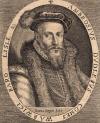
Robert Dudley, 1st Earl of Leicester (24 June 1532 – 4 September 1588) was an English statesman and the favourite of Elizabeth I from her accession until his death. He was a suitor for the queen's hand for many years.
Dudley's youth was overshadowed by the downfall of his family in 1553 after his father, the Duke of Northumberland, had failed to prevent the accession of Mary I. Robert Dudley was condemned to death but was released in 1554 and took part in the Battle of St. Quentin under Mary's husband and co-ruler, Philip, which led to his full rehabilitation, but also to the death of his older brother Henry. On Elizabeth I's accession in November 1558, Dudley was appointed Master of the Horse. In October 1562, he became a privy councillor and, in 1587, was appointed Lord Steward of the Royal Household. In 1564, Dudley became Earl of Leicester and, from 1563, one of the greatest landowners in North Wales and the English West Midlands by royal grants.
The Earl of Leicester was one of Elizabeth's leading statesmen, involved in domestic as well as foreign politics alongside William Cecil and Sir Francis Walsingham. Although he refused to be married to Mary, Queen of Scots, Leicester was for a long time relatively sympathetic to her until, from the mid-1580s, he urged her execution. As patron of the Puritan movement, he supported non-conforming preachers but tried to mediate between them and the bishops of the Church of England. A champion also of the international Protestant cause, he led the English campaign in support of the Dutch Revolt (1585–1587). His acceptance of the post of governor-general of the United Provinces infuriated Queen Elizabeth. The expedition was a military and political failure, and it ruined Leicester financially. Leicester was engaged in many large-scale business ventures and was one of the main backers of Francis Drake and other explorers and privateers. During the Spanish Armada, Leicester was in overall command of the English land forces. In this function, he invited Queen Elizabeth to visit her troops at Tilbury. This was the last of many events he had organised over the years, the most spectacular being the festival at his seat Kenilworth Castle in 1575 on the occasion of a three-week visit by the Queen. Leicester was a principal patron of the arts, literature, and the Elizabethan theatre.
Leicester's private life interfered with his court career and vice versa. When his first wife, Amy Robsart, fell down a flight of stairs and died in 1560, he was free to marry the queen. However, the resulting scandal very much reduced his chances in this respect. Popular rumours that he had arranged for his wife's death continued throughout his life, despite the coroner's jury's verdict of accident. For 18 years he did not remarry for Queen Elizabeth's sake and when he finally did, his new wife, Lettice Knollys, was permanently banished from court. This and the death of his only legitimate son and heir were heavy blows. Shortly after the child's death in 1584, a virulent libel known as Leicester's Commonwealth was circulated in England. It laid the foundation of a literary and historiographical tradition that often depicted Leicester as the Machiavellian "master courtier" and as a deplorable figure around Elizabeth I. More recent research has led to a reassessment of his place in Elizabethan government and society.
Leia mais...Isabel I de Inglaterra
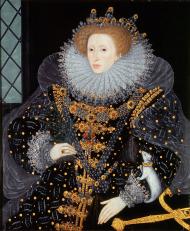
Isabel I ou Elizabeth I (Greenwich, 7 de setembro de 1533 – Richmond, 24 de março de 1603), também chamada de "A Rainha Virgem", "Gloriana" ou "Boa Rainha Bess" ("Bess" era como Roberto Dudley, seu favorito, a chamava) foi Rainha Reinante da Inglaterra e Irlanda de 1558 até sua morte e a quinta e última monarca da Casa de Tudor. Como filha do rei Henrique VIII, Isabel nasceu dentro da linha de sucessão; entretanto, a sua mãe Ana Bolena foi executada dois anos e meio após seu nascimento, e o casamento dos seus pais foi anulado. Isabel assim foi declarada ilegítima.
O seu meio-irmão Eduardo VI sucedeu a D. Henrique e reinou até morrer em 1553. Antes da sua morte, Eduardo nomeou Joana Grey como rainha, excluindo da sucessão as suas meias-irmãs Isabel e a católica Maria I, apesar da existência de um estatuto declarando o contrário. Porém, o seu testamento acabou anulado e Maria tornou-se rainha, tendo Joana sido executada. Isabel foi também feita prisioneira, durante cerca de um ano, no reinado de Maria, por suspeitas de apoiar os rebeldes protestantes.
Isabel sucedeu a Maria em 1558 e passou a reinar com um conselho. A rainha passou a depender muito de um grupo de conselheiros de confiança liderados por Guilherme Cecil, Barão Burghley. Uma das suas primeiras ações como rainha foi o estabelecimento de uma igreja protestante inglesa, da qual tornou-se sua Governadora Suprema. A Resolução Religiosa Isabelina mais tarde desenvolveu-se na atual Igreja Anglicana. Era também esperado que ela se casasse e gerasse um herdeiro para continuar a linhagem da Casa de Tudor, porém, nunca se casou apesar de ter tido vários pretendentes. Isabel ficou famosa pela sua castidade enquanto envelhecia. Um culto cresceu ao seu redor tendo sido celebrada em pinturas, desfiles e obras literárias.
A governação de Isabel foi mais moderada do que a do pai e a dos meio-irmãos. Um de seus lemas era video et taceo ("Vejo e digo nada"). Era relativamente tolerante em questões religiosas, evitando perseguições sistemáticas. Depois de 1570, quando o Papa a declarou ilegítima e permitiu aos seus súditos que deixassem de lhe obedecer, várias conspirações ameaçaram a sua vida. Todos os planos foram derrotados com a ajuda dos serviços secretos dos seus ministros. Isabel era cautelosa em assuntos estrangeiros, movimentando-se entre as grandes potências da França e Espanha. Apoiou, sem entusiasmo, várias campanhas militares ineficazes e mal equipadas nos Países Baixos do Sul, na França e Irlanda. Porém, por volta da década de 1580, uma guerra contra Espanha tornou-se inevitável. Quando os espanhóis finalmente decidiram em 1588 tentar conquistar a Inglaterra, o fracasso da Armada Invencível associou Isabel a uma das maiores vitórias militares da história inglesa.
O reinado ficou para sempre conhecido como o Período Isabelino, famoso acima de tudo pelo florescimento do drama inglês, liderado por dramaturgos como William Shakespeare e Christopher Marlowe, além das proezas marítimas dos aventureiros ingleses como Sir Francis Drake. Alguns historiadores são mais contidos nas sua avaliações a Isabel. Eles representam-na como uma governante temperamental, às vezes indecisa e que teve muita sorte. Uma série de problemas económicos e militares diminuíram a sua popularidade ao final de seu reinado. Isabel é reconhecida como uma intérprete carismática e uma sobrevivente obstinada num período em que o governo era uma instituição desorganizada e limitada, e monarcas de países vizinhos enfrentavam problemas internos que ameaçavam seus tronos. Assim foi o caso da rival Maria da Escócia, que foi presa por Isabel em 1568, e acabou por ser executada em 1587. Depois dos curtos reinados de Eduardo VI e Maria I, deu estabilidade ao reino e ajudou a criar um sentimento de identidade nacional.
Leia mais...Robert Dudley, 1st Earl of Leicester
Douglas Sheffield, Baroness Sheffield
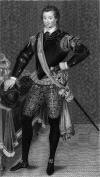
Douglas, Lady Sheffield (née Howard; 1542/1543 – 1608), was an English noblewoman, the lover of Robert Dudley, 1st Earl of Leicester and mother by him of explorer-cartographer Sir Robert Dudley, an illegitimate son.
Seventeen years after Leicester's death she claimed in litigation that she had secretly been his wife, although she had herself remarried while Leicester was still alive.
Leia mais...