Quem namorou Angie Dickinson?
John F. Kennedy namorou Angie Dickinson de ? a ?. A diferença de idade foi de 14 anos, 4 meses e 1 dias.
Frank Sinatra namorou Angie Dickinson de ? a ?. A diferença de idade foi de 15 anos, 9 meses e 18 dias.
Angie Dickinson

Angie Dickinson, nascida Angeline Brown (Kulm, 30 de setembro de 1931), é uma atriz estadunidense que fez trabalhos para a televisão e o cinema, talvez melhor conhecida como Sargento Leann "Pepper" Anderson em Police Woman.
Leia mais...John F. Kennedy

John Fitzgerald Kennedy (May 29, 1917 – November 22, 1963), also known as JFK, was the 35th president of the United States, serving from 1961 until his assassination in 1963. He was the youngest person elected president, at 43 years, and the first Catholic president. Kennedy served at the height of the Cold War, and the majority of his foreign policy concerned relations with the Soviet Union and Cuba. A member of the Democratic Party, Kennedy represented Massachusetts in both houses of the United States Congress before his presidency.
Born into the prominent Kennedy family in Brookline, Massachusetts, Kennedy graduated from Harvard University in 1940, joining the U.S. Naval Reserve the following year. During World War II, he commanded PT boats in the Pacific theater. Kennedy's survival following the sinking of PT-109 and his rescue of his fellow sailors made him a war hero and earned the Navy and Marine Corps Medal, but left him with serious injuries. After a brief stint in journalism, Kennedy represented a working-class Boston district in the U.S. House of Representatives from 1947 to 1953. He was subsequently elected to the U.S. Senate, serving as the junior senator from Massachusetts from 1953 to 1960. While in the Senate, Kennedy published his book Profiles in Courage, which won a Pulitzer Prize. Kennedy ran in the 1960 presidential election. His campaign gained momentum after the first televised presidential debates in American history, and he was elected president, narrowly defeating Republican opponent Richard Nixon, the incumbent vice president.
Kennedy's presidency saw high tensions with communist states in the Cold War. He increased the number of American military advisers in South Vietnam, and the Strategic Hamlet Program began during his presidency. In 1961, he authorized attempts to overthrow the Cuban government of Fidel Castro in the failed Bay of Pigs Invasion and Operation Mongoose. In October 1962, U.S. spy planes discovered Soviet missile bases had been deployed in Cuba. The resulting period of tensions, termed the Cuban Missile Crisis, nearly resulted in nuclear war. In August 1961, after East German troops erected the Berlin Wall, Kennedy sent an army convoy to reassure West Berliners of U.S. support, and delivered one of his most famous speeches in West Berlin in June 1963. In 1963, Kennedy signed the first nuclear weapons treaty. He presided over the establishment of the Peace Corps, Alliance for Progress with Latin America, and the continuation of the Apollo program with the goal of landing a man on the Moon before 1970. He supported the civil rights movement but was only somewhat successful in passing his New Frontier domestic policies.
On November 22, 1963, Kennedy was assassinated in Dallas. His vice president, Lyndon B. Johnson, assumed the presidency. Lee Harvey Oswald was arrested for the assassination, but he was shot and killed by Jack Ruby two days later. The Federal Bureau of Investigation (FBI) and the Warren Commission both concluded Oswald had acted alone, but conspiracy theories about the assassination persist. After Kennedy's death, Congress enacted many of his proposals, including the Civil Rights Act of 1964 and the Revenue Act of 1964. He ranks highly in polls of U.S. presidents with historians and the general public. His personal life has been the focus of considerable sustained interest following public revelations in the 1970s of his chronic health ailments and extramarital affairs. Kennedy is the most recent U.S. president to have died in office.
Leia mais...Angie Dickinson
Frank Sinatra
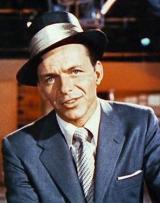
Francis Albert Sinatra (Hoboken, 12 de dezembro de 1915 – Los Angeles, 14 de maio de 1998), mais conhecido pelo nome artístico Frank Sinatra, foi um cantor, ator e produtor estadunidense, considerado um dos maiores artistas de todos os tempos. Foi um dos músicos recordistas de vendas, com mais de 150 milhões de cópias mundialmente. Filho de imigrantes italianos, nasceu na cidade de Hoboken e iniciou sua carreira musical na era do swing, vertente do jazz, em companhia dos músicos Harry James e Tommy Dorsey. Sinatra encontrou a fama como artista solo depois que assinou contrato com a gravadora Columbia, em 1943, tornando-se o ídolo das bobby soxers. Lançou seu álbum de estreia, The Voice of Frank Sinatra, em 1946. Sua carreira profissional havia parado no início da década de 1950, voltando para a cidade de Las Vegas, onde tornou-se um dos mais conhecidos artistas de residência, integrando o grupo Rat Pack. Sua carreira renasceu com o sucesso do filme From Here to Eternity (1953), lhes rendendo um Óscar e um Globo de Ouro na categoria de "Melhor Ator Coadjuvante". O cantor lançou vários álbuns elogiados pela crítica, incluindo In the Wee Small Hours (1955), Songs for Swingin 'Lovers! (1956), Come Fly with Me (1958), Only the Lonely (1958) e Nice 'n' Easy (1960).
Em 1960, o músico deixou a gravadora Capitol para iniciar a sua própria, a Reprise Records, lançando uma série de álbuns de sucesso. Em 1965, gravou a retrospectiva September of My Years e estrelou o especial de televisão ganhador do Prêmio Emmy, Frank Sinatra: A Man and His Music (1965). Depois de gravar Sinatra at the Sands (1966) em Las Vegas, com o pianista Count Basie, no ano seguinte gravou uma de suas mais famosas colaborações com o músico-compositor brasileiro Tom Jobim, através do álbum Francis Albert Sinatra & Antonio Carlos Jobim (1967). Posteriormente, o próximo álbum em parceria foi o Francis A. & Edward K. (1968), com Duke Ellington. Sinatra se aposentou pela primeira vez em 1971, porém saiu da aposentadoria dois anos depois, gravando vários materiais, voltando a apresentar-se no Caesars Palace e alcançando sucesso com a canção "New York, New York" (1980). Utilizando seus shows em Las Vegas como base, realizou suas turnês pelos Estados Unidos e internacionalmente até pouco antes de falecer, em 1998.
Em paralelo à musica, construiu a carreira cinematográfica. Depois de ganhar um Óscar pelo filme From Here to Eternity (1953), estrelando também em The Man with the Golden Arm (1955) e The Manchurian Candidate (1962). Apareceu em vários musicais como On the Town (1949), Guys and Dolls (1955), High Society (1956) e Pal Joey (1957) — ganhando outro Globo de Ouro com este último. No final de sua carreira, frequentemente interpretava detetives. Mais tarde, receberia o Globo de Ouro Cecil B. DeMille Award em 1971. Na televisão, o programa The Frank Sinatra Show começou na American Broadcasting Company (ABC) em 1950, continuando a fazer aparições na televisão durante os anos 1950 e 1960. Esteve fortemente envolvido com a política desde meados da década de 1940 e, ativamente, fez campanha para presidentes como Franklin D. Roosevelt, Harry S. Truman, John F. Kennedy e Ronald Reagan. Chegou a ser investigado pelo Federal Bureau of Investigation (FBI) por seu suposto relacionamento com a máfia.
Leia mais...