Quem namorou Marcello Mastroianni?
Ursula Andress namorou Marcello Mastroianni de ? a ?. A diferença de idade foi de 11 anos, 5 meses e 20 dias.
Claudia Cardinale namorou Marcello Mastroianni de ? a ?. A diferença de idade foi de 13 anos, 6 meses e 18 dias.
Anouk Aimée namorou Marcello Mastroianni de ? a ?. A diferença de idade foi de 7 anos, 6 meses e 30 dias.
Catherine Deneuve namorou Marcello Mastroianni de ? a ?. A diferença de idade foi de 19 anos, 0 meses e 24 dias.
Lauren Hutton namorou Marcello Mastroianni de ? a ?. A diferença de idade foi de 19 anos, 1 meses e 20 dias.
Faye Dunaway namorou Marcello Mastroianni de a . A diferença de idade foi de 16 anos, 3 meses e 17 dias.
Anna Maria Tatò namorou Marcello Mastroianni de a . A diferença de idade foi de 15 anos, 6 meses e 22 dias.
Marcello Mastroianni

Marcello Mastroianni [marˈt͡ʃɛlːo mastroˈjanːi], né le à Fontana Liri (Latium) et mort le à Paris 6e (Île-de-France), est un acteur italien.
Il est l'un des plus grands acteurs italiens de l'histoire du cinéma ainsi que l'un des plus connus et les plus appréciés à l'étranger à partir des années 1960, notamment pour ses rôles dans sept des films de Federico Fellini dont La dolce vita (1960) et Huit et demi (1963) ainsi que pour les douze films dans lesquels il a partagé la vedette avec Sophia Loren. Capable de jongler parfaitement entre les rôles dramatiques et comiques, il est généralement associé aux grands noms de la comédie à l'italienne que sont Alberto Sordi, Ugo Tognazzi, Vittorio Gassman et Nino Manfredi.
Contrairement à ses collègues italiens, Mastroianni a également joué dans plusieurs films français, dont le plus connu est La Grande Bouffe (1973) avec Philippe Noiret et son ami Michel Piccoli. Dans ces années-là, il a également entretenu une liaison avec Catherine Deneuve, ce qui a considérablement accru sa notoriété en France.
Il a été nommé trois fois pour l'Oscar du meilleur acteur, pour Divorce à l'italienne (1961), pour Une journée particulière (1977) et pour Les Yeux noirs (1987). Il a remporté de nombreux prix majeurs : deux Golden Globes, deux BAFTA, huit David di Donatello, huit Rubans d'argent, cinq Globi d'oro et un Ciak d'oro. Avec Jack Lemmon et Dean Stockwell, il est l'un des trois acteurs à avoir remporté à deux reprises le Prix d'interprétation masculine au festival de Cannes, en 1970 pour Drame de la jalousie et en 1987 pour Les Yeux noirs de Nikita Mikhalkov. Il a remporté deux fois la Coppa Volpi à la Mostra de Venise pour Quelle heure est-il d'Ettore Scola et Un, deux, trois, soleil de Bertrand Blier. En 1990, il a reçu le Lion d'or pour l'ensemble de sa carrière et en 1993, un César d'honneur.
Leia mais...Ursula Andress

Ursula Margo Andress (Ostermundigen, 19 de março de 1936) é uma atriz de cinema suíça. Foi um dos grandes símbolos sexuais das telas na década de 1960, lançada como bond girl no primeiro filme de James Bond, 007 Contra o Satânico Dr. No (1962) e logo na sequência foi chamada por Elvis Presley para participar do filme, Fun in Acapulco (1963). Seguiu em comédias, filmes de aventura e eróticos como 007 Cassino Royale, O Que é Que Há Gatinha?, O Crepúsculo das Águias, entre outros, sempre fazendo papéis sensuais, que exploravam sua beleza física.
A participação no filme de 007, que a transformou numa sensação mundial, também lhe deu um Globo de Ouro de Revelação Feminina daquele ano, que dividiu com as atrizes Tippi Hedren e Elke Sommer, e foi nomeada como "Estrela de Amanhã". Pioneira no papel que seria rotulado como bond-girl na história do cinema, é considerada em diversas pesquisas de fãs e críticos através das décadas como a maior delas em todos os tempos, e é também a única atriz a ter feito dois papéis principais femininos em dois filmes de James Bond, Honey Ryder, em Dr. No, e Vesper Lynd, na paródia de Bond de 1967, Casino Royale.
Leia mais...Marcello Mastroianni
Claudia Cardinale
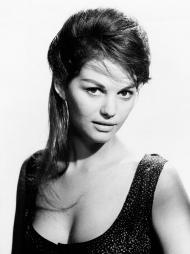
Claude Josephine Rose Cardinale (Túnis, 15 de abril de 1938 – Nemours, 23 de setembro de 2025) foi uma atriz ítalo-francesa nascida na Tunísia. Estrelou alguns dos filmes europeus mais aclamados das décadas de 1960 e 1970, principalmente italianos ou franceses, mas também em muitos filmes em inglês.
Criada em La Goulette, município próximo a Túnis, Cardinale venceu o concurso "A Mais Linda Garota Italiana na Tunísia", em 1957, cujo prêmio foi uma viagem à Itália, que rapidamente levou-a a contratos de filmes, devido principalmente ao envolvimento de Franco Cristaldi, que atuou como seu mentor por vários anos e depois a desposou.
Após sua estreia em um papel menor com Omar Sharif, em Goha (1958), Cardinale tornou-se uma das atrizes mais conhecidas na Itália depois de papéis em filmes, como Rocco e i suoi fratelli (1960), La ragazza con la valigia (1961), Cartouche (1962), Il gattopardo (1963) e 8½ de Fellini (1963).
A partir de 1963, Cardinale tornou-se conhecida nos Estados Unidos e na Grã-Bretanha após seu papel em The Pink Panther, ao lado de David Niven. Por vários anos apareceu em filmes de Hollywood, como Blindfold (1965), Lost Command (1966), The Professionals (1966), The Hell with Heroes (1968) e o épico Western de Sergio Leone Once Upon a Time in the West (1968), uma produção conjunta EUA-Itália, na qual ela é elogiada por seu papel como ex-prostituta, ao lado de Jason Robards, Charles Bronson e Henry Fonda.
Cansada da indústria cinematográfica de Hollywood e desejando não se tornar um clichê, Cardinale voltou ao cinema italiano e francês, onde recebeu o prêmio David di Donatello de melhor atriz por seus papéis em Il giorno della civetta (1968) e como prostituta, ao lado de Alberto Sordi, em A Girl in Australia (1971). Em 1974, Cardinale conheceu o diretor Pasquale Squitieri, que viria a se tornar seu parceiro e de cujos filmes costumava aparecer, incluindo I Guappi (1974), Corleone (1978) e Claretta (1984), o último dos quais ganhou o Prêmio Nastro d'Argento, como Melhor Atriz.
Em 1982 estrelou no Fitzcarraldo, de Werner Herzog, como o interesse amoroso de Klaus Kinski, que levanta os fundos para comprar um navio a vapor no Peru. Em 2010, Cardinale recebeu o prêmio de Melhor Atriz no 47º Festival Internacional de Cinema de Antalya, recebendo o Golden Orange por sua atuação como uma idosa italiana que recebe um jovem estudante de intercâmbio turco, em Signora Enrica.
Falando sobre causas dos direitos da mulher ao longo dos anos, Cardinale foi Embaixadora da Boa Vontade para a Defesa dos Direitos da Mulher da UNESCO, desde março de 2000 e Embaixadora da boa vontade do Dia Mundial da Água, em 2006. Em fevereiro de 2011, a Los Angeles Times Magazine nomeou Cardinale entre as cinquenta mulheres mais bonitas da história do cinema.
Leia mais...Marcello Mastroianni
Anouk Aimée
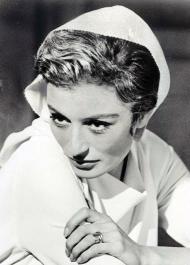
Nicole Françoise Florence Dreyfus (French pronunciation: [nikɔl fʁɑ̃swaz flɔʁɑ̃s dʁɛfys]; 27 April 1932 – 18 June 2024), known professionally as Anouk Aimée (French: [anuk ɛme]) or Anouk, was a French film actress who appeared in 70 films from 1947 until 2019. Having begun her film career at age 14, she studied acting and dance in her early years, besides her regular education. Although the majority of her films were French, she also made films in Spain, the United Kingdom, Italy and Germany, along with some American productions.
Among her films are Federico Fellini's La dolce vita (1960), after which she was considered a "rising star who exploded" onto the film world. She subsequently acted in Fellini's 8½ (1963), Jacques Demy's Lola (1961), George Cukor's Justine (1969), Bernardo Bertolucci's Tragedy of a Ridiculous Man (1981), and Robert Altman's Prêt à Porter (1994). She won the Golden Globe Award for Best Actress in a Motion Picture – Drama and the BAFTA Award for Best Actress and was nominated for the Academy Award for Best Actress for her acting in A Man and a Woman (1966). The film "virtually reignited the lush on-screen romance in an era of skeptical modernism", and brought her international fame.
She won the Award for Best Actress at the Cannes Film Festival for Marco Bellocchio's film A Leap in the Dark (1980). In 2002, she received an honorary César Award, France's national film award. Aimée was known for her "striking features" and beauty, and considered "one of the hundred sexiest stars in film history", according to a 1995 poll conducted by Empire magazine. She often portrayed a femme fatale with a melancholy aura. In the 1960s, Life magazine commented: "after each picture her enigmatic beauty lingered" in the memories of her audience, and called her "the Left Bank's most beautiful resident".
Leia mais...Marcello Mastroianni
Catherine Deneuve

Catherine Fabienne Dorléac (born 22 October 1943), known professionally as Catherine Deneuve (UK: , US: , French: [katʁin dənœv] ), is a French actress. She is considered one of the greatest European actresses on film. In 2020, The New York Times ranked her as one of the greatest actors of the 21st century.
Deneuve made her screen debut in 1957 at age 13, in a film shot the previous year when she was only 12. A major figure of the New Wave, she became, like Brigitte Bardot and Alain Delon, one of the best-known French artists in the world. In a career spanning nearly 70 years, she has played more than a hundred roles and is recognized in France and internationally for being one of the key faces of the musical film genre with appearances in The Umbrellas of Cherbourg, The Young Girls of Rochefort, Donkey Skin, 8 Women and The Beloved. Early in her career, she gained acclaim for her portrayals of aloof and mysterious beauties while working for well-known directors such as Luis Buñuel, François Truffaut, Jacques Demy, Roman Polanski, and Agnès Varda. Her career led her to work in several countries: in the United States, under the direction of Robert Aldrich and Tony Scott; in the United Kingdom, collaborating with Terence Young and Dick Richards; in Italy, with Marco Ferreri, Mauro Bolognini, Sergio Citti, Mario Monicelli and Dino Risi; in Spain, with Luis Buñuel; in Portugal, with Manoel de Oliveira; in Denmark, with Lars von Trier; in Japan, with Eric Khoo; and also in Austria, Russia and Lebanon. She played in films attracting a total of nearly 99 million spectators in theaters, making her the working actress with the most admissions in France. In 1985, she succeeded Mireille Mathieu as the official face of Marianne, France's national symbol of liberty.
She has received numerous accolades over her career including a César Award for The Last Metro and the Venice Film Festival's Volpi Cup for Best Actress for Place Vendôme, as well as nominations for an Academy Award for Indochine and a BAFTA Award for Belle de Jour. To English-speaking audiences, Deneuve is best known for The Hunger. Her other notable films include Repulsion, The April Fools, Scene of the Crime and My Favorite Season. She has received honorary awards, including the Berlin International Film Festival's Golden Bear in 1998, the Cannes Film Festival's Honorary Palme d'Or in 2005, and the Venice Film Festival's Golden Lion in 2022.
Leia mais...Marcello Mastroianni
Lauren Hutton

Lauren Hutton (n. Charleston, Carolina del Sur, 17 de noviembre de 1943) es una modelo y actriz estadounidense. Adquirió fama por ser la primera maniquí en firmar contrato con una marca de cosméticos y por sus roles en las películas Once Bitten y American Gigolo.
Leia mais...Marcello Mastroianni
Faye Dunaway

Dorothy Faye Dunaway (born January 14, 1941) is an American actress. She is the recipient of many accolades, including an Academy Award, a Primetime Emmy Award, three Golden Globe Awards, and a BAFTA Award.
Her career began in the early 1960s on Broadway. She made her screen debut in 1967 in The Happening, the same year she made Hurry Sundown with an all-star cast, and rose to fame with her portrayal of outlaw Bonnie Parker in Arthur Penn's Bonnie and Clyde, for which she received her first Academy Award nomination. Her most notable films include the crime caper The Thomas Crown Affair (1968), the romantic drama The Arrangement (1969), the revisionist Western Little Big Man (1970), a two-part adaptation of the Alexandre Dumas classic The Three Musketeers (1973, with The Four Musketeers following in 1974), the neo-noir mystery Chinatown (1974) for which she earned her second Oscar nomination, the action-drama disaster The Towering Inferno (1974), the political thriller Three Days of the Condor (1975), the satire Network (1976) for which she won an Academy Award for Best Actress, the thriller Eyes of Laura Mars (1978), and the sports drama The Champ (1979).
Her career evolved to more mature character roles in subsequent years, often in independent features, beginning with her controversial portrayal of Joan Crawford in the 1981 biopic Mommie Dearest. Her later films include Supergirl (1984), Barfly (1987), The Handmaid's Tale (1990), Arizona Dream (1994), Don Juan DeMarco (1995), The Twilight of the Golds (1997), Gia (1998) and The Rules of Attraction (2002). Dunaway has also performed on stage in several plays, including A Man for All Seasons (1961–63), After the Fall (1964), Hogan's Goat (1965–67), and A Streetcar Named Desire (1973). She was awarded the Sarah Siddons Award for her portrayal of opera singer Maria Callas in Master Class (1996).
Protective of her private life, she rarely gives interviews and makes very few public appearances. After romantic relationships with Jerry Schatzberg and Marcello Mastroianni, Dunaway married twice, first to singer Peter Wolf and then to photographer Terry O'Neill, with whom she had a son, Liam.
Leia mais...Marcello Mastroianni
Anna Maria Tatò
Anna Maria Tatò (19 April 1940 – 3 June 2022) was an Italian film director. She directed six films between 1978 and 1997. Her film Marcello Mastroianni: mi ricordo, sì, io mi ricordo was screened in the Un Certain Regard section at the 1997 Cannes Film Festival.
Leia mais...