Quem namorou Suzanne Valadon?
Miguel Utrillo namorou Suzanne Valadon de ? a ?. A diferença de idade foi de 3 anos, 7 meses e 7 dias.
Henri de Toulouse-Lautrec namorou Suzanne Valadon de ? a ?. A diferença de idade foi de 0 anos, 9 meses e 30 dias.
Erik Satie namorou Suzanne Valadon de ? a ?. A diferença de idade foi de 0 anos, 7 meses e 24 dias.
Suzanne Valadon
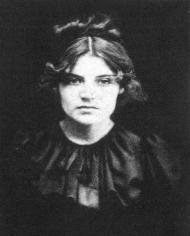
Marie-Clémentine Valade, mais conhecida como Suzanne Valadon (Bessines-sur-Gartempe, 23 de setembro de 1865 – Paris, 7 de abril de 1938) foi uma pintora francesa pós-impressionista e personalidade marcante na cena artística parisiense no período que precede o cubismo. Foi garçonete dos cafés de Montmartre e acrobata, abandonando o circo para tornar-se modelo de Renoir, Puvis de Chavannes e Toulouse-Lautrec. Iniciou-se, sob proteção de Edgar Degas, na pintura, no pastel e no desenho, tornando-se, pouco tempo depois, a primeira mulher admitida na Société Nationale des Beaux-Arts.
Leia mais...Miguel Utrillo

Miquel Utrillo i Morlius (1862-1934) est un ingénieur, peintre, décorateur et critique d'art espagnol.
D'origine catalane, il est proche à ses débuts du modernisme catalan.
Leia mais...Suzanne Valadon
Henri de Toulouse-Lautrec

Henri Marie Raymond de Toulouse-Lautrec-Montfa (Albi, 24 de novembro de 1864 – Saint-André-du-Bois, 9 de setembro de 1901) foi um pintor pós-impressionista e litógrafo francês, conhecido por pintar a vida boêmia de Paris do final do século XIX. Sendo ele mesmo um boêmio, faleceu precocemente aos 36 anos de sífilis e alcoolismo. Trabalhou por menos de vinte anos mas deixou um legado artístico importantíssimo, tanto no que se refere à qualidade e quantidade de suas obras, como também no que se refere à popularização e comercialização da arte. Toulouse-Lautrec revolucionou o design gráfico dos cartazes publicitários, ajudando a definir o estilo que seria posteriormente conhecido como Art Nouveau. Filho mais velho do Conde Toulouse-Lautrec-Montfa, de quem deveria herdar o título, falecendo antes do pai.
Leia mais...Suzanne Valadon
Erik Satie

Eric Alfred Leslie Satie (17 May 1866 – 1 July 1925), better known as Erik Satie, was a French composer and pianist. The son of a French father and a British mother, he studied at the Paris Conservatoire but was undistinguished and did not obtain a diploma. In the 1880s he worked as a pianist in café-cabarets in Montmartre, Paris, and began composing works, mostly for solo piano, such as his Gymnopédies and Gnossiennes. He also wrote music for a Rosicrucian sect to which he was briefly attached.
Following a period of sparse compositional productivity, Satie entered Paris's second music academy, the Schola Cantorum, as a mature student. His studies there were more successful than those at the Conservatoire. From about 1910 he became the focus of successive groups of young composers attracted by his unconventionality and originality. Among them were the group known as Les Six. A meeting with Jean Cocteau in 1915 led to the creation of the ballet Parade (1917) for Sergei Diaghilev, with music by Satie, sets and costumes by Pablo Picasso, and choreography by Léonide Massine.
Satie's example guided a new generation of French composers away from post-Wagnerian Impressionism towards a sparer, terser style. During his lifetime, he influenced Maurice Ravel, Claude Debussy, and Francis Poulenc, and he is seen as an influence on more recent composers such as John Cage and John Adams. His harmony is often characterised by unresolved chords; he sometimes dispensed with bar-lines, as in his Gnossiennes; and his melodies are generally simple and often reflect his love of old church music. He gave some of his later works absurd titles, such as Véritables Préludes flasques (pour un chien) ("True Flabby Preludes (for a Dog)", 1912), Croquis et agaceries d'un gros bonhomme en bois ("Sketches and Exasperations of a Big Wooden Man", 1913) and Sonatine bureaucratique ("Bureaucratic Sonatina", 1917). Most of his works are brief, and the majority are for solo piano. Exceptions include his "symphonic drama" Socrate (1919) and two late ballets Mercure and Relâche (1924).
Satie never married, and his home for most of his adult life was a single small room, first in Montmartre and, from 1898 to his death, in Arcueil, a suburb of Paris. He adopted various images over the years, including a period in quasi-priestly dress, another in which he always wore identically coloured velvet suits, and is known for his last persona, in neat bourgeois costume, with bowler hat, wing collar, and umbrella. He was a lifelong heavy drinker, and died of cirrhosis of the liver at the age of 59.
Leia mais...